Logo Vs Icon: What’s the Difference?
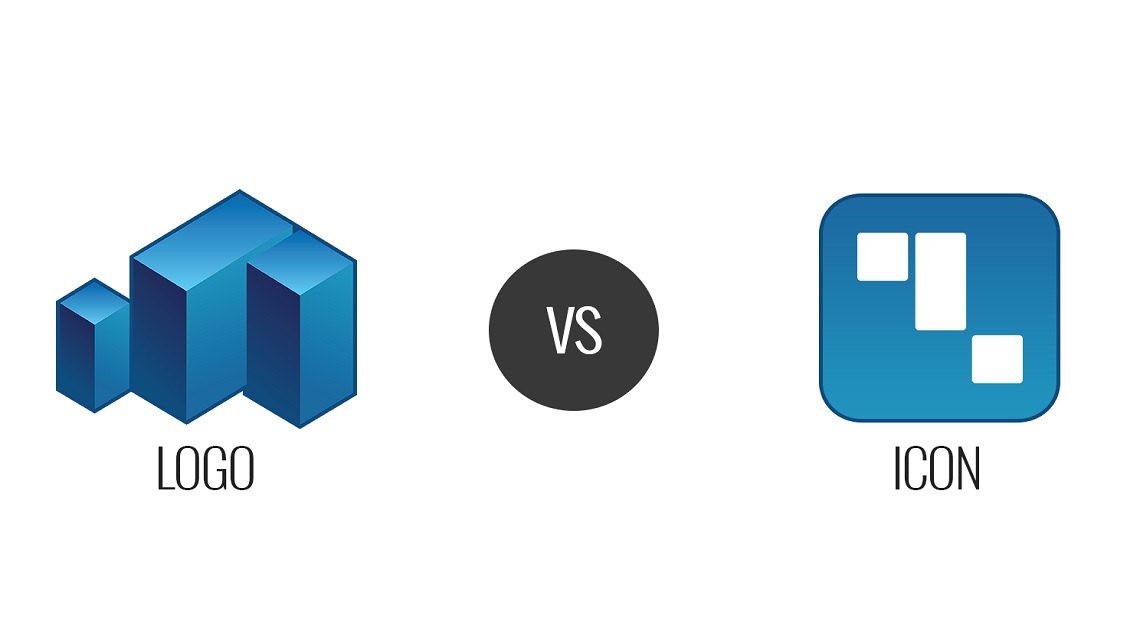
In the world of digital design, marketing and branding, the terms “logo” and “icon” are often mistakenly used in place of one another. Both serve as visual tools. But, they have different functions and purposes along with implications. Underrating the difference between them is important for business designers and users.
This is because the effectiveness of a brand or product can depend on the correct use of these elements. The discussion below offers you a fundamental difference between the two in various aspects. Let us join the discussion without any further delay.
Before we dive directly into the differences, we must understand what a logo and an icon is. So, here we go with our discussion.
Table of Contents
What is a Logo?
A logo is a symbol or graphic mark. It is specifically designed to represent a company, organisation or brand. It contains the identity, values and mission of the brand. It typically combines text with imagery into a single cohesive element. It is not merely a decorative piece. It is a strategic asset for recognition along with trust.
Key Characteristic of Logos
The following are the key characteristics of logos.
Brand Identity Tool
Logos are made to be memorable symbols of the core personality of the brand. A well-made logo can produce emotions. They can also establish credibility along with fostering customer loyalty.
Versatile Design
Logos should be adaptable to the different platforms as well as contexts. They must do so without losing their impact.
Complexity and Customization
Logos can differ from minimalist marks to intricate designs. They often use custom typography or brand colour, or tailored symbols.
Longevity
Logos are typically designed for use in the long term.
Recognition
A strong logo becomes a reflection of what brand it represents.
What is an Icon?
An icon is a simplified visual representation. They are used for conveying meaning or function or some action. Iconics help to navigate to illustrate tools. Thus, they enhance usability along with guiding users. They are commonly found in the star interfaces.
Key Characteristics of Icons
The following are the key characteristics of icons.
Function Over Identity
Icons have the design to enhance user experience. They do so through visual representation of commands, functions, or ideas. And it is not for a brand.
Simplicity and Clarity
The icons are minimal for guaranteeing instant recognition. A trash can icon implies delete. This can be one example.
Scalable for Interface Use
Sons are designed for working effectively in small sizes. They also work across devices along with screen resolutions.
Dynamic and Contextual
Isovn usually changes based on app or platform design trends. Their lifespan is shorter. It is also more dynamic than the logos.
Universal Language
Effective icons transcend language and align with culture. They use universally understood visuals for communicating actions or concepts.
| Feature | Logo | Icon |
| Definition | It is a visual mark. It represents the identity of a brand. | A simplified graphic resenting an action or object |
| Purpose | It builds brand recognition along with loyalty | It improves interface use |
| Design Complexity | It can be intricate or customised | They are simple and minimal. They are universally understood |
| Longevity | They are designed for long term brand use | They are designed for long term brand use |
| Function | Emotional and symbolic representation | They are digitally functional and directive |
| Scalability | It functions across every media size and type | They are designed for clarity at small digital sizes |
| Emotional Impact | It builds emotional brand connection | It delivers instant visual communication |
Differences Between an Icon and a Logo
Now, let us dive into the various aspects of the difference between a logo and an icon.
Design Differences
Typography vs Symbolism
Logis usually include typography. It involves company names or initials stylised uniquely. On the other hand, icons avoid text for a while. They depend on symbols.
Colour and Detail
Logos usually use colour palettes that are specific to the brand. It helps to reflect personality and tone. They can include shading gr, agents, or fine details. At the same time, icons are easily digested in monochrome or flat colours. It helps for quick recognition as well as implicitly.
Context of Use
A logo used across all brand touch points. It includes websites, packaging advertising, merchandise, merchandise and business documents. An icon is generally embedded with an app website interface as a function tool.
Purpose and Function
-
- The following are the functions of logos.
- They help customers recognise as well as remember a brand
- They build an emotional connection with the audiences
- They convey values along with personality and professionalism.
- They guarantee consistency across marketing materials.
On the other hand, the following are the functions of icons.
-
- They make digital experiences more intuitive
- They enhance navigation as well as accessibility
- They represent features or functions quickly and clearly
- They bring down the need for explanatory text.
Historical Evolutions
Logos date back centuries. Embalmed or family crests and signature marks were used to signify ownership or craftsmanship. Logos evolved into strategic business assets. At the same time, icons originated in the digital age. Icons replaced textual commands as graphical user interfaces became common. They made software and websites more user-friendly.
Misconceptions and Overlaps
It is understood that people confuse logos and icons.
-
- Some logos resemble icons. For example, Apple’s app symbol is simply an icon. Term it represents an entire.
- Icons are sometimes used as mini logos. Apps often display a simplified logo version as their app icon.
However, the two must not be designed with the same approach. A logo demands deeper strategic thought and a brand segment. On the other hand, icons need charity and usability along with universality.
Visual Identity Systems
In modern branding, logos and icons can be a part of a larger visual identity system. It includes the following.
-
- Logos
- Icons
- Colour palettes
- Typography
- User interface elements
This system guarantees consistency across touchpoints while distinguishing between identity and functionality.
When to Use Which?
The following are the instances when you can use a logo.
-
- Launching or representing a business
- Creating brand awareness materials
- When you want to design packaging ads or promotional merchandise
- When establishing a presence online or offline
The following are the instances when you can use an icon.
-
- When you are building a website or app interface
- When you are providing navigation or interaction cues
- For improving mobile or desktop use deprince
- When you want to replace or bring down text in a digital layout.
Customisation vs Standardisation
Logos are usually highly customised. They are designed to reflect the reality of the brand along with its tone and unique identity. Designers invest time crafting unique logos and tell a brand story.
On the other hand, icons follow standardised design systems or guidelines for guaranteeing consistency across platforms. Logos prioritise distinctiveness. But icons emphasise familiarity and clarity. It means that a logo is meant to be unique to one brand. However, icons may look similar across apps or interfaces to support intuitive user interactions.
Final Words
Both logos and icons are crucial visual tools. But they serve fundamentally different purposes. A logo Deftones and expresses the identity of a brand. They foster recognition along with trust and loyalty over time. On the other hand, an icon is useful. They streamline digital interactions through simplified and universal visuals.
Mistaking one for the other can lead to ineffective branding or confusing interfaces. Understanding the differences between the two enables designers, along with businesses, to strategically use each element where it delivers the most impact.